This first blog post (June 2026, photos to be added when I'm not working at Frogman's) will be about my time as a visiting artist at St. Michael's Printshop (St. Johns, Newfoundland) for the month of April 2026.
When I applied for this residency (in 2023?!), my proposed project was unsurprisingly, something I wasn't sure I wanted as a print in 2026. About two weeks before the residency I sat down and very loosely outlined pages for an artist book about a house haunted by its own shadows. My primary inspiration came from assisting Lys Cianci with her book structures workshop at Zea Mays Printmaking. Lys introduced us to an adhesive-based storage book, created by adhering single folios to an accordion spine, wherein each glued folio acts like an open ended pocket. I was imagining each folio to represent a room of the house, where you could peek down into each folio to find etchings of ghosts and shadows hiding from the living household beings on the outside of the folio.
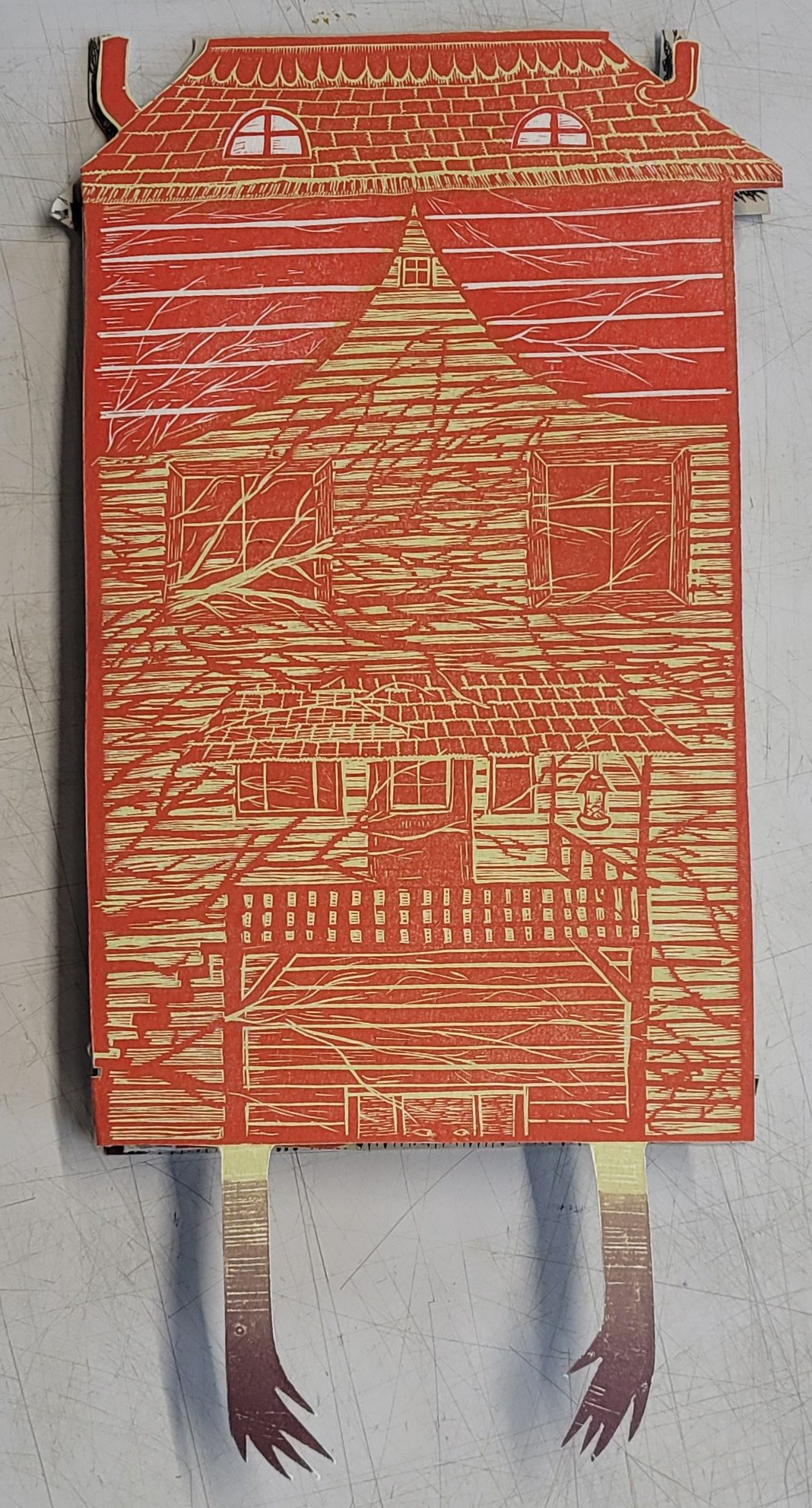
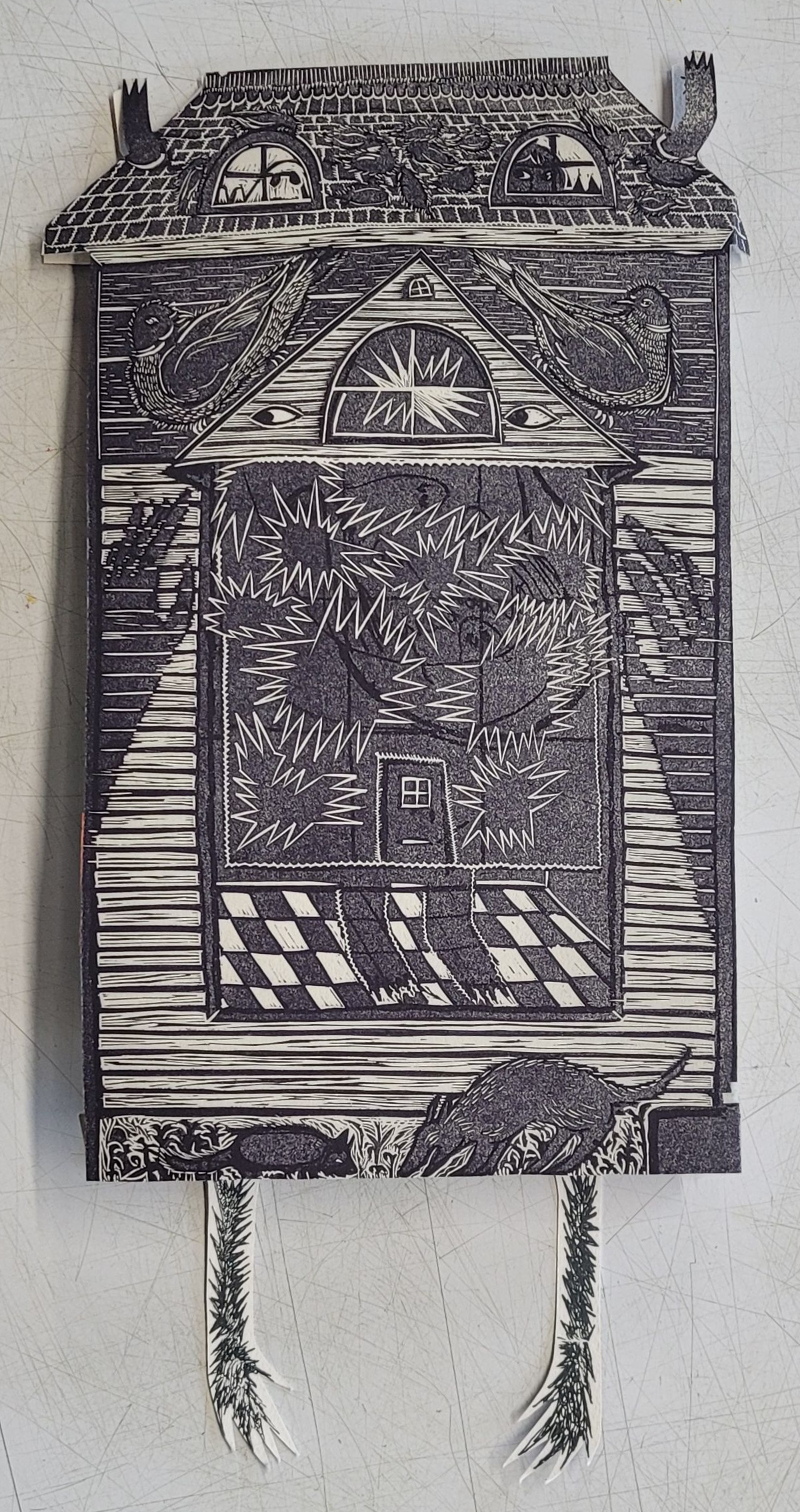
I started carving a linoleum block of a tall house (but also kind of a person if they were a house) with shadowy branches across its exterior the week before, inspired by the houses in St. John's...and then I was off to Newfoundland!
This was my first time in Canada, first month-long residency, and my first time as an adult traveling (internationally) completely solo. I was equal parts excited and anxious about everything, from understanding the metric system to my proposed print project. When I arrived in St. John's, it was quite literally the evening before a big snowstorm, so I got a really nice slow start the first day. It was fun (I say since I never have to walk up Carter's Hill again) to explore some of St. John's steep inclines, icy sidewalks, and delicious pastries from Birdie's.
Once fully settled in St. Michael's Printshop, I spent a solid week or two creating some etchings of houses trying to run away from their own shadows, with the intent of these characters being enclosed within the folios. The whole concept of this artist book is based on personal experiences of deconstruction. Being raised in an evangelical household as a sheltered, closeted person means that there's a lot of past actions that I regret, hateful rhetoric and fear-based ideology that I am always going to be unlearning. There's also parts of the religious community that I miss - the comfort and support of consistent church/youth group events, the times with friends that were full of joy and fun. Away from organized religion and conditional acceptance, I wasn't sure who I was and what I truly believed in.
I wanted to make an artist book that conveyed that teetering feeling of re-examining what I once thought were concrete beliefs and sense of self, but also my feelings of shame and wanting to hide away from accountability and introspection.
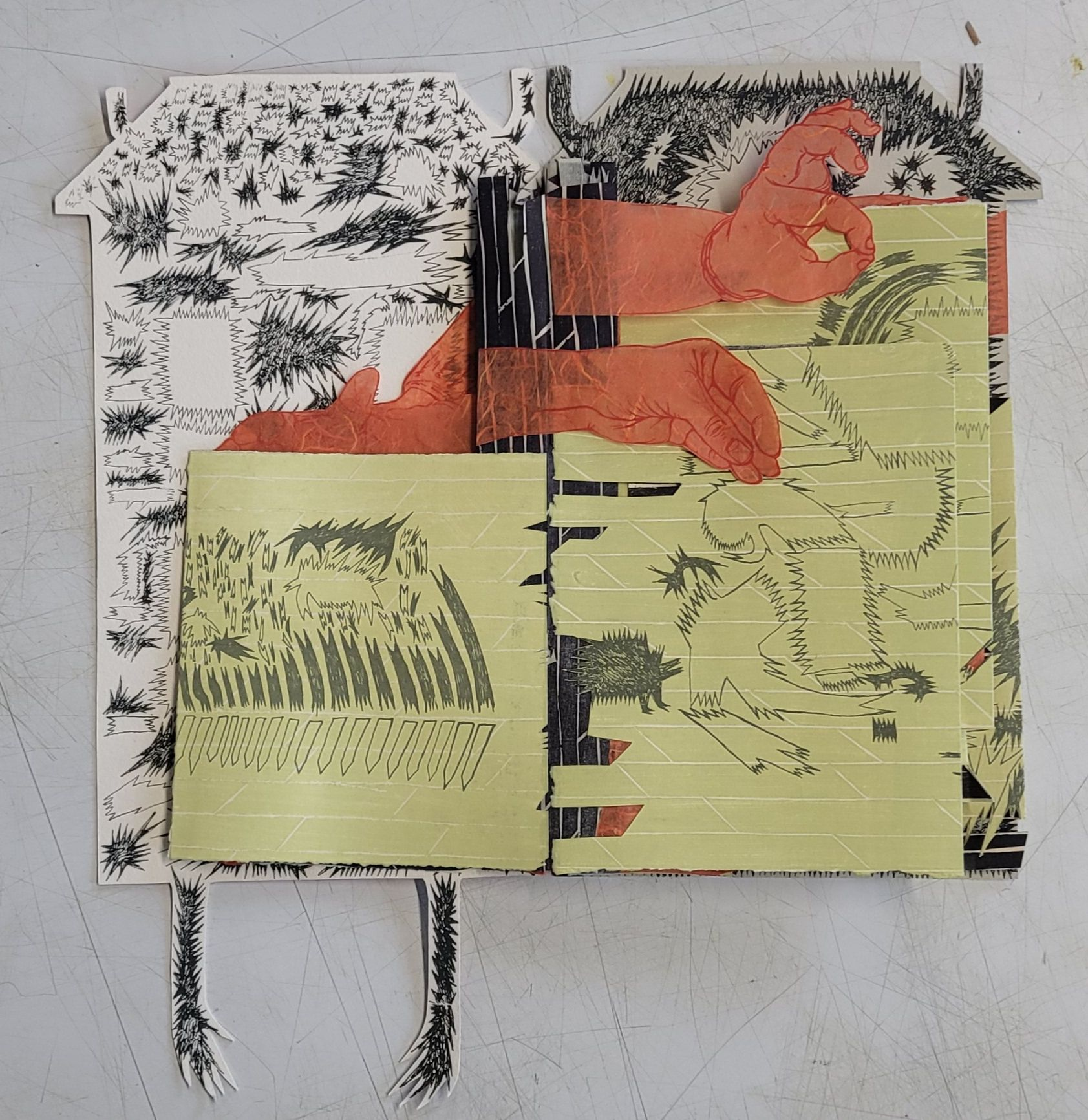
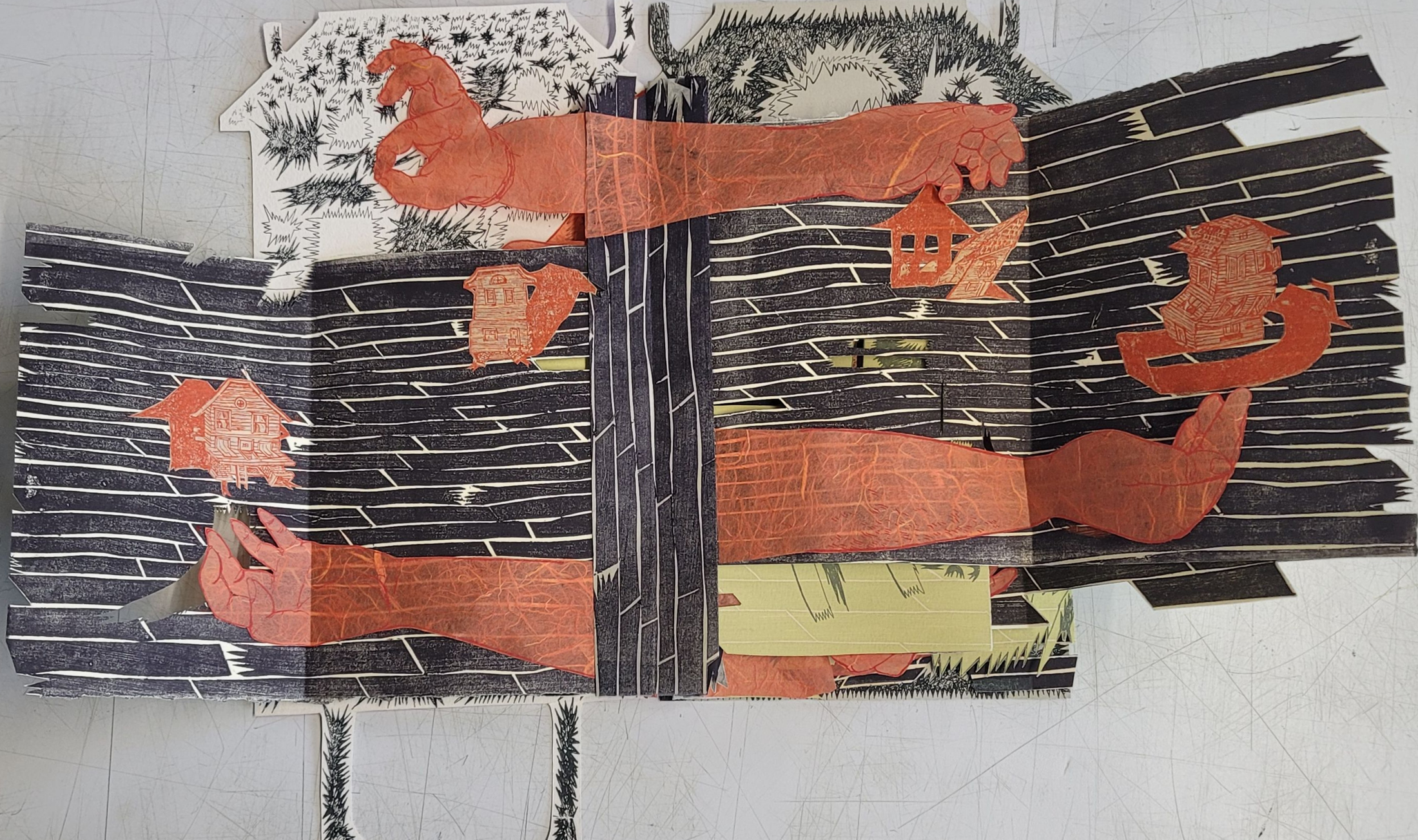
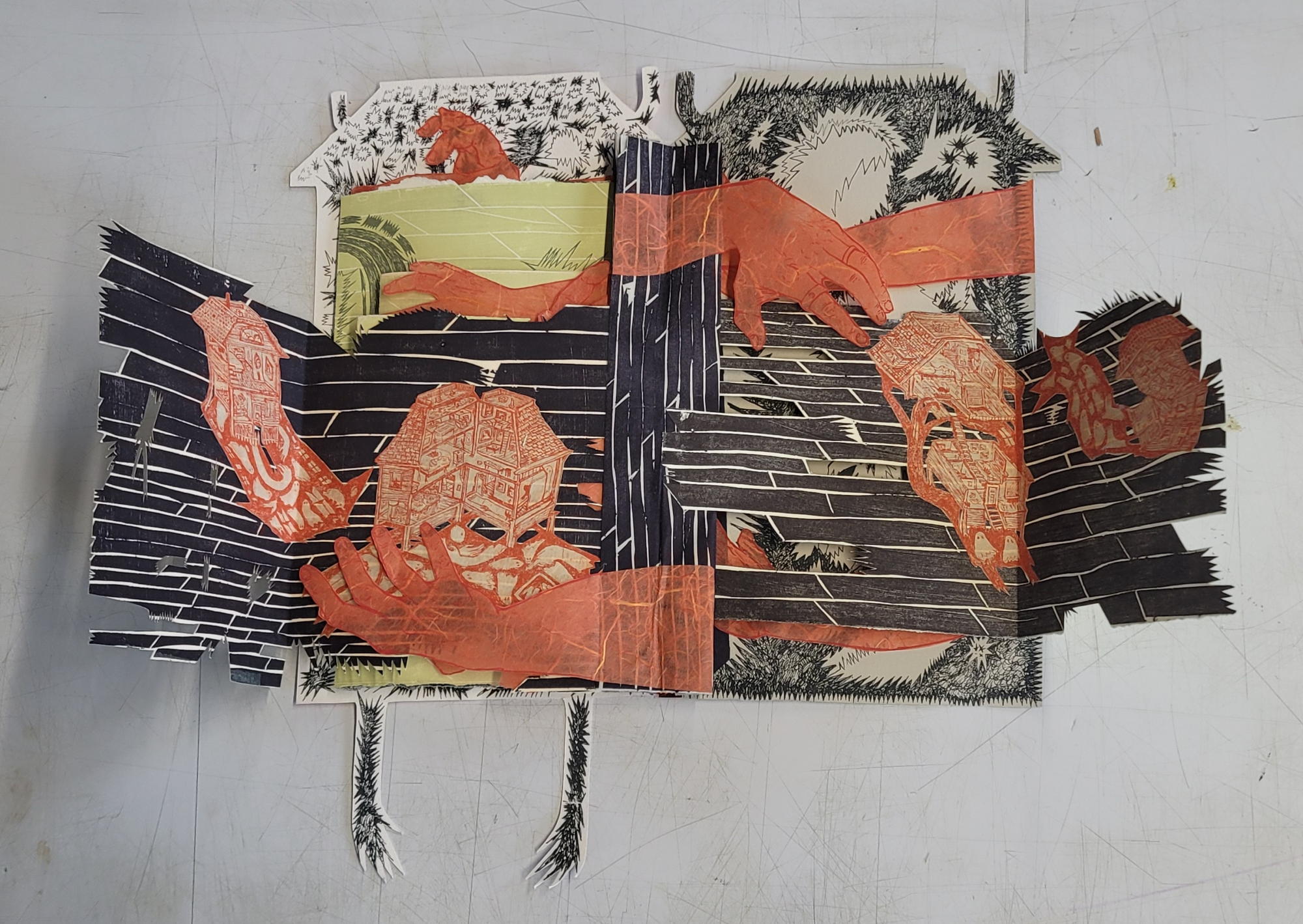
After another week of printing floorboard/shadow floorboards to make up the book folios, then another week of screenprinting diagrammatic drawings of shadows and living house parts at odds with one another (quickly changed my mind from the "folios as rooms" idea because I didn't think I'd have the time), and another week of awkwardly asking everyone in that printshop if I could photograph and draw their hands, I made a mockup in my last week there and realized that if the folio were traditionally adhered to the accordion spine, it was impossible to ever fully view the tiny etchings (unless you had a flashlight and lots of patience). I decided to leave one end of the folio unglued, so the viewer could open each folio fully to see the inside details.
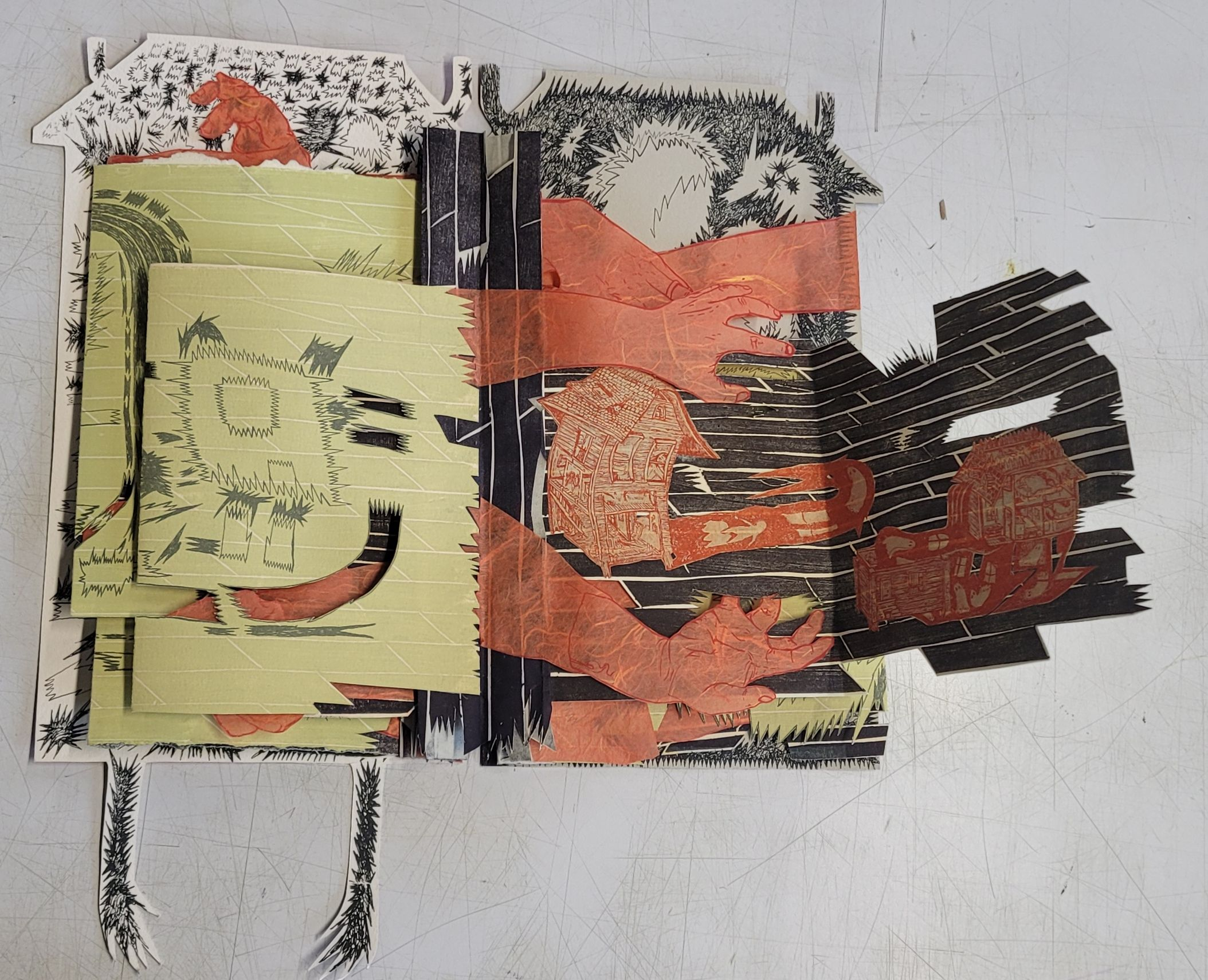
The printed components of the book were straightforward to print, which gave me space in the assembly step to experiment with the layout and make a variable edition. For some folios I cut parts of the screenprinted drawings out to be keyholes to the inner etchings (also to encourage viewers to physically open the folios out), in other folios I partially cut into the screenprinted drawings so the viewer could lift a tiny segment up or down. As I was cutting into each folio, I decided that as the viewer pages through the book, the folios would get more and more parts cut away to be less structurally sound, more fragile to handle.
One amazing part of this book that turned out differently than I expected were the screenprinted hands. I initially wanted some super long arms to be woven in and out of different folios, but stalled out on drawing them because I wasn't sure what gestures the hands should be making. I first asked Marlies (wonderful printmaker and human being, also former intern of SMP) what she would do if she had to handle a ghost. She made an amazing pinched gesture!!! That got the ball rolling and soon I was asking everyone if I could take photographs of their hands "handling a ghost" (note: this is an awkward thing to ask of people you've only known for less than a month, but they still let me inside the building the next day so it turned out okay). SMP also sold this gorgeous translucent, fibrous red paper that looked a bit veiny when the hands were printed on top! Another excellent aspect that I had not expected.
A welcome and bright aspect about a residency at a community printshop are meeting the different folks working at the shop. I found so much inspiration from just being physically present in the shop every day. Marlies Rise, Emily Pittman, Brenda Mabel Reid (and their partner Lacy!), Julie Clapperton, Oscar Jarsky, Dierdre Maguire, Christine Koch, Irena, Bruce, Daniel, Noah, and so many other kind people...getting to talk to them about their work (Emily's litho fabric quilts! Brenda's family quilts! Julie's dead birds!), their lives... getting to just work alongside artists close to my age!!!! (not by myself in a basement with my cats!) surrounded by art, passing ships, snow, and seagull calls.
I've been writing and rewriting this entire blog post because this residency was so meaningful to me, and I don't know how to communicate that well. It's sheer luck that I can even go after these kinds of opportunities. It was also really inspiring and heartening to see a thriving, lesbian/queer run community printshop. Maybe I'll leave it with what my wife said to me: I got to spend a month talking to nice gay people, while she had to work a 9 to 5.